Technical Insights
2026年1月23日
Hyson Steel Guardrail Formwork Construction Guide: Methods & Process
Master the professional construction methods for Hyson Steel Guardrail Formwork. From site preparation and installation to concrete casting and maintenance, ensure superior engineering quality.
In modern bridge and highway construction, the quality of the guardrail is paramount for both safety and structural aesthetics. Hyson Steel Guardrail Formwork is engineered to provide high precision, durability, and ease of use. This guide outlines the standard construction and processing methods to ensure optimal results when using our premium steel systems.
1. Construction Preparation
A successful project begins with meticulous preparation. Before deploying the formwork, the following steps must be completed:
- Material Preparation:Based on the specific design requirements, prepare the high-quality steel panels ensuring specifications match the blueprints. Gather necessary reinforcement materials, such as channel steel and square steel, along with matching connection accessories like bolts and nuts. Simultaneously, prepare the concrete raw materials (cement, aggregates, etc.).
- Site Preparation:Clear the construction site to ensure the ground is solid, level, and free of debris. Implement effective drainage measures to facilitate the smooth installation of the system and subsequent concrete casting operations.
2. Installation Process
Precision during the installation phase is critical to the structural integrity and visual alignment of the final guardrail.
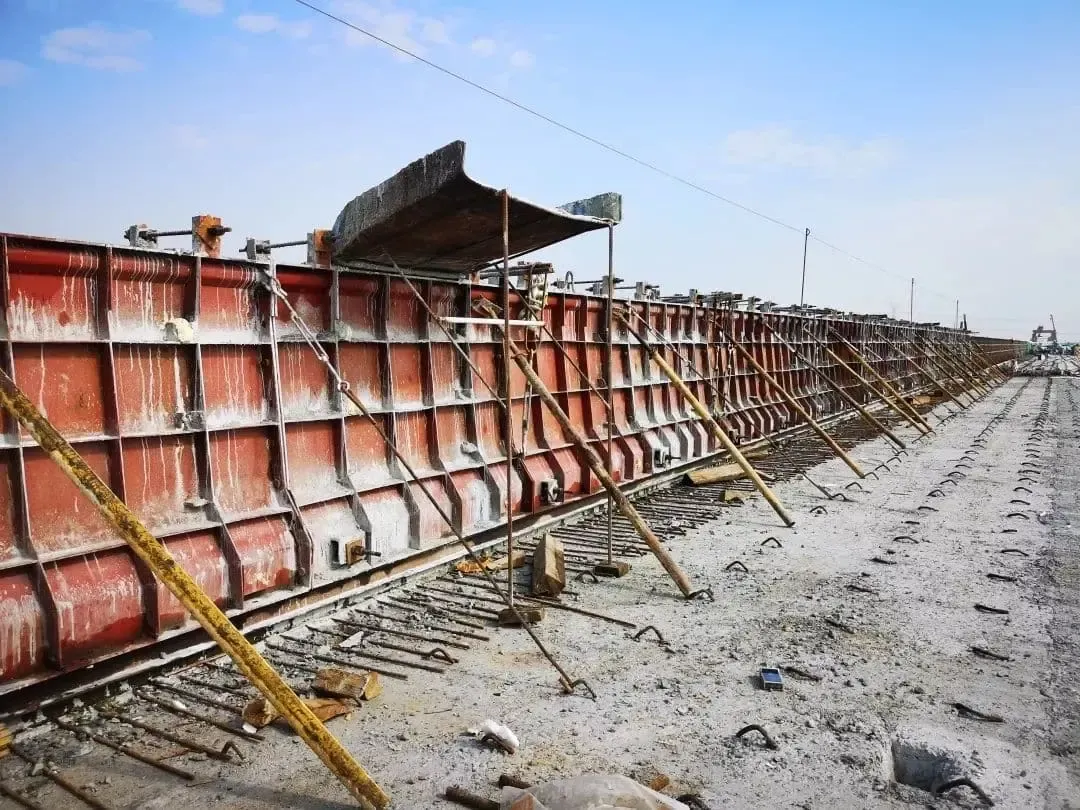
- Assembly:Assemble the formwork panels piece by piece at the designated assembly area. Ensure that the joints between templates are tight and seamless. It is recommended to apply sealing strips at the splicing seams to effectively prevent slurry leakage during the concrete pour.
- Positioning & Alignment:Hoist the assembled units to the installation position using a crane. Use precise measuring instruments to adjust the position and verticality, ensuring strict adherence to design standards. Secure the bottom of the structure to the foundation or ground using anchor bolts.
- Reinforcement & Support:Utilize channel steel or square steel as back walers (stiffeners). Reinforce the steel templates using tie rods (through bolts) to enhance overall stability. This step is crucial to guarantee that the system does not deform or bulge under the pressure of the wet concrete.
3. Concrete Casting
Proper casting techniques protect the equipment investment and ensure a flawless concrete finish.
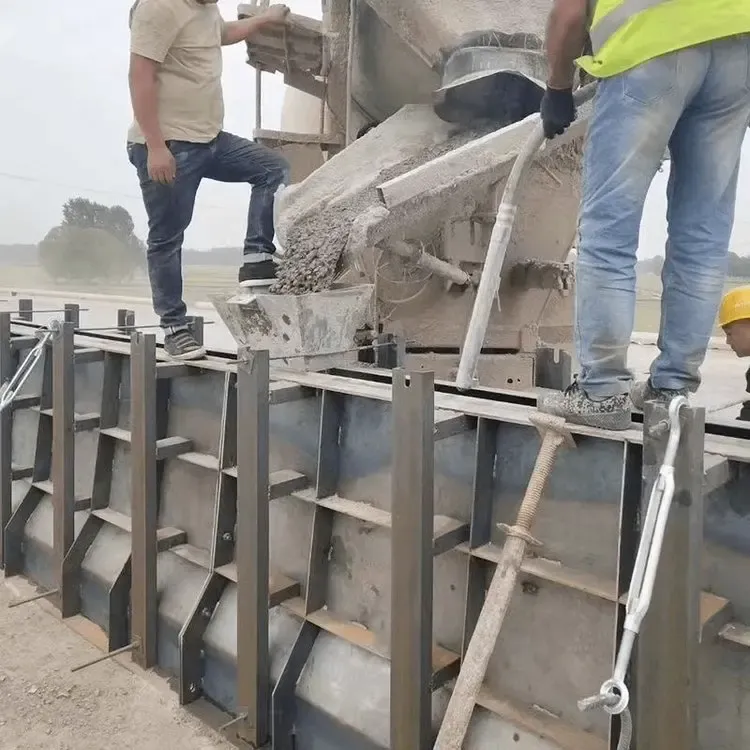
- Pre-Casting Inspection:Before pouring begins, conduct a final inspection of the setup. Check that all reinforcements are secure and seams are tight. Additionally, perform acceptance checks on concealed works, such as rebar installation.
- Pouring Process:Adopt appropriate pouring methods, such as using a concrete pump truck or a crane with a hopper. Control the pouring height carefully, casting in layers and vibrating thoroughly to ensure density. This prevents common quality issues like honeycombing or pitted surfaces.Critical Note:During vibration, ensure the vibrator does not directly collide with the steel face to avoid denting or deformation.
4. Removal Procedure
Timely and careful removal is essential for the safety of the structure and the longevity of the equipment.
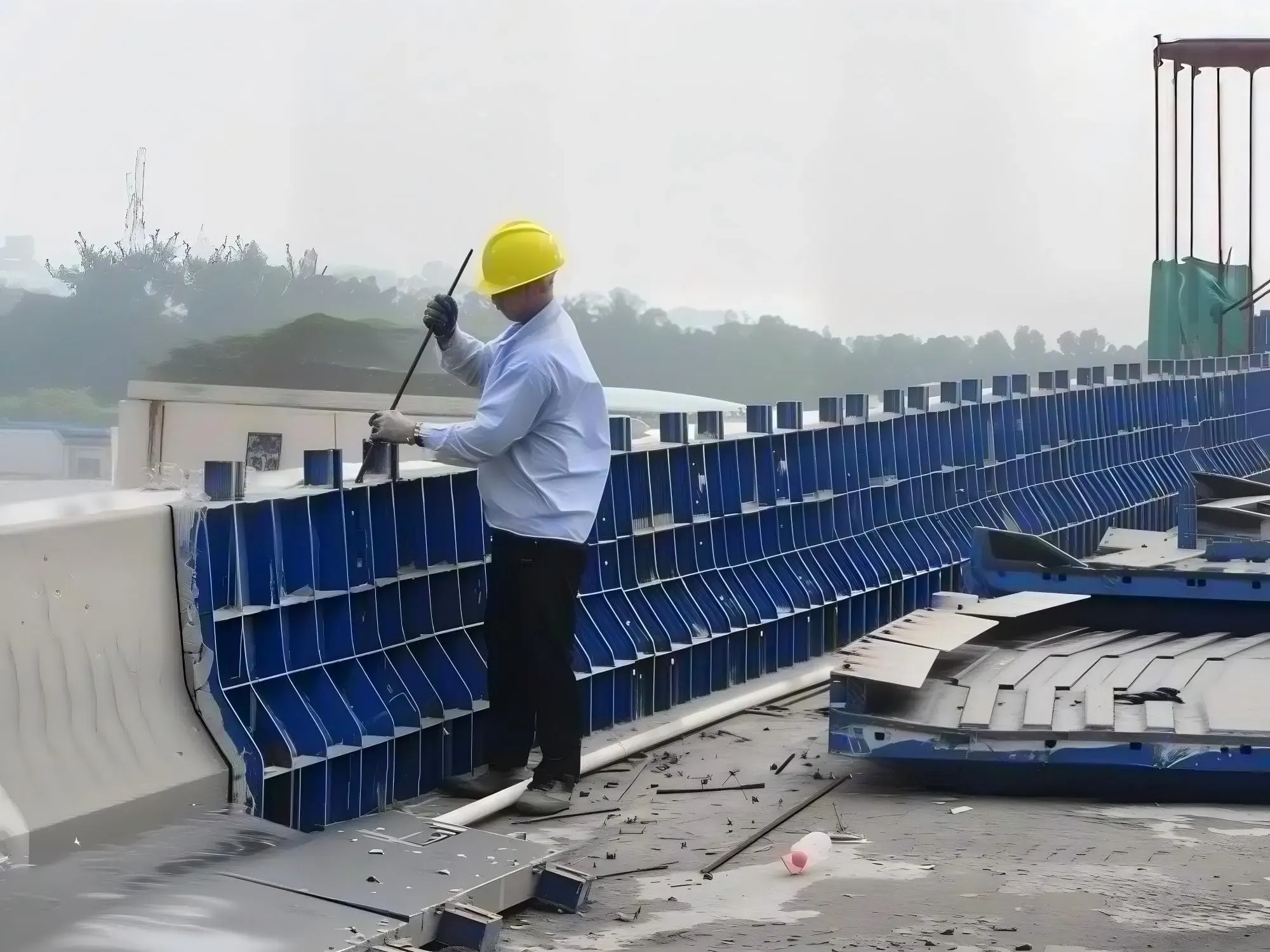
- Removal Time:The formwork can be removed once the concrete has reached a specific strength threshold. This is typically determined by the concrete type and design requirements, generally not less than 50% - 75% of the design strength.
- Removal Sequence:Follow a strict disassembly order: first remove the connection accessories, then the reinforcement supports, and finally the steel panels. Exercise caution to protect the corners and edges of the concrete guardrail from damage during this process.
5. Post-Maintenance
Proper maintenance ensures the reusability of the system and the durability of the concrete structure.
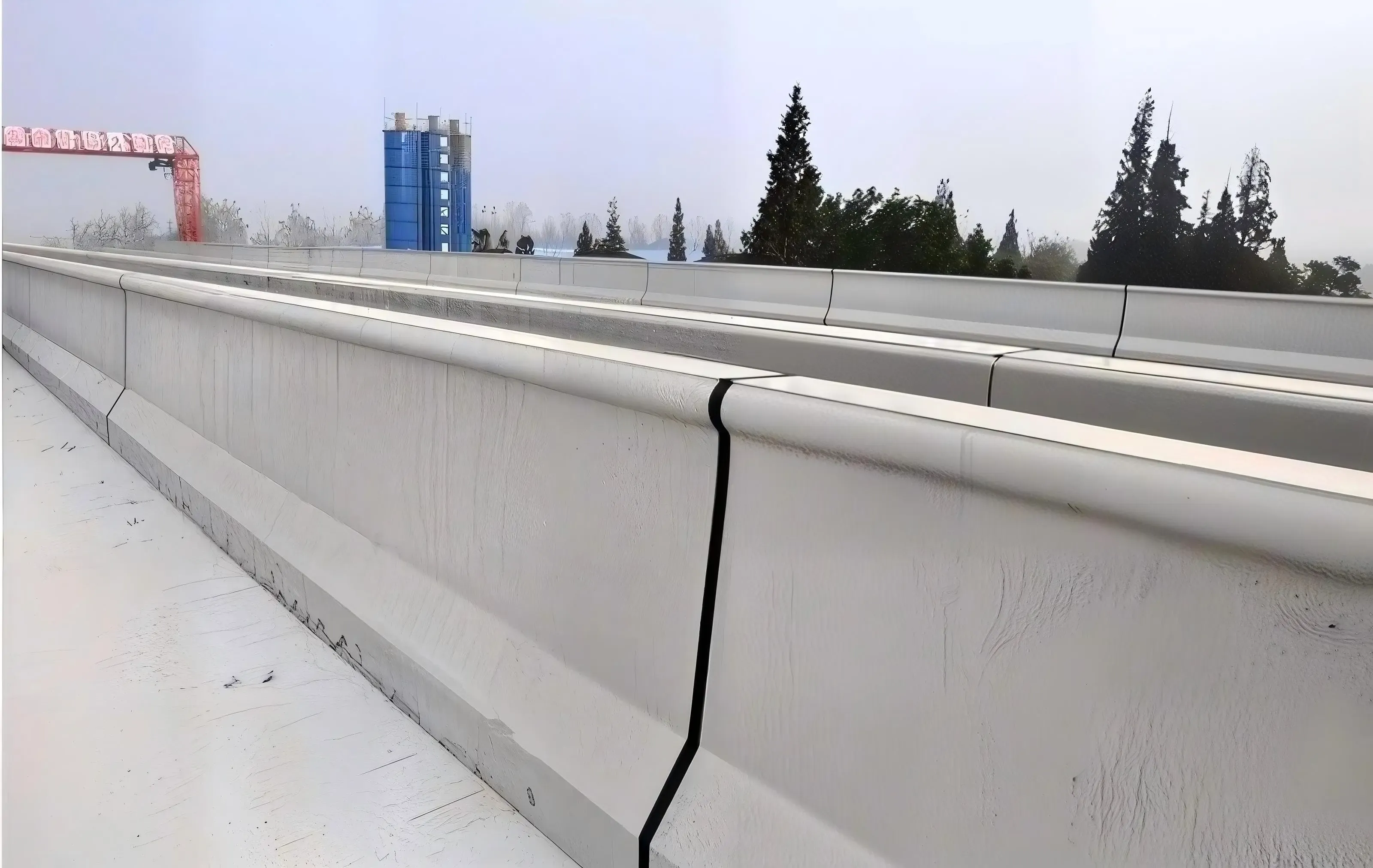
- Cleaning & Storage:Immediately after removal, the panels must be cleaned. Remove all concrete residue and debris from the surface. Apply a high-quality release agent (form oil) and store the units properly to ensure they are ready for the next use.
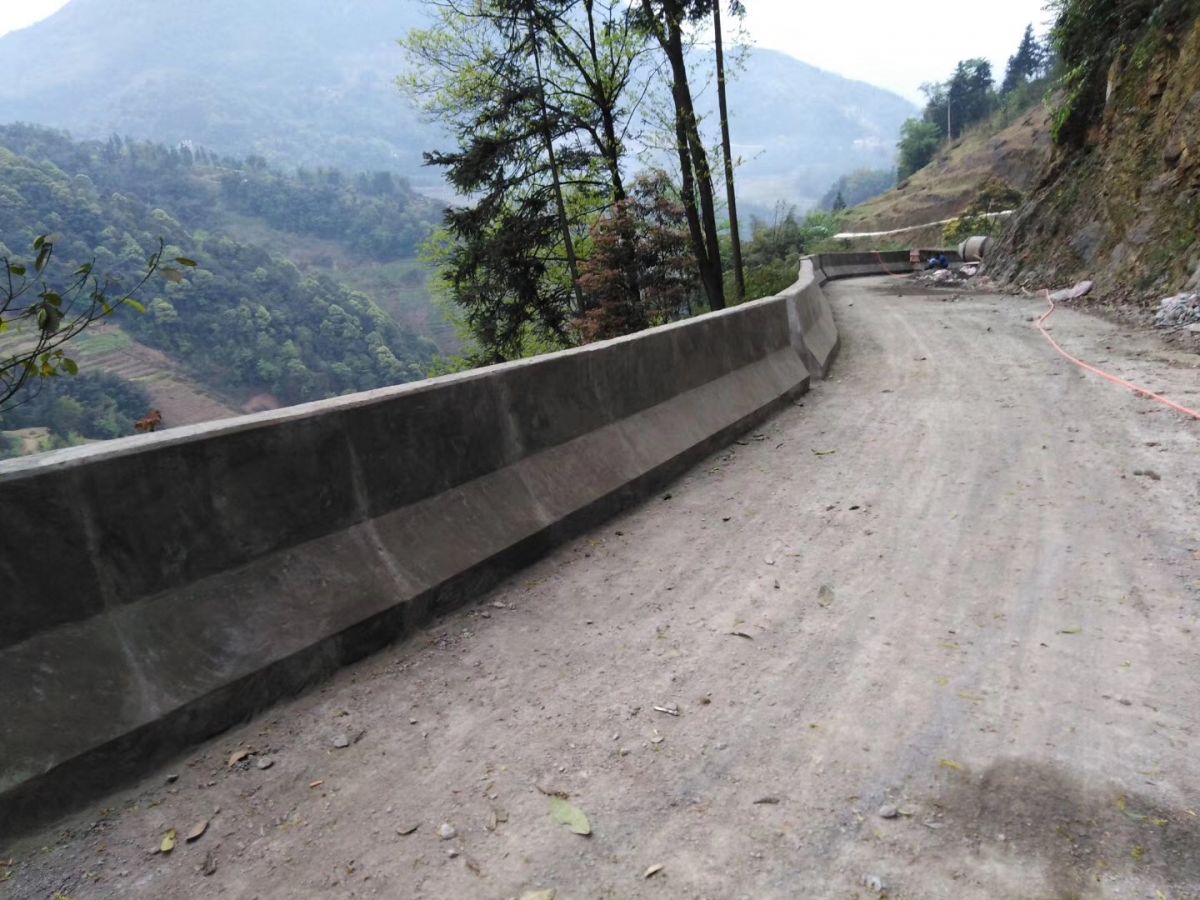
- Concrete Curing:Implement curing measures for the newly cast concrete guardrail, such as covering it with plastic film or regular water sprinkling. This ensures normal strength growth and prevents the formation of shrinkage cracks.
By adhering to these standardized construction and processing methods, Hyson Steel Guardrail Formwork delivers exceptional performance, ensuring your infrastructure projects meet the highest standards of safety and quality.